
Aluminum-Core Hybrid WPC Cladding
Vertigo 5010 is a co-extruded aluminum core with a wood-polypropylene composite (WPC) face. One profile, two strengths: the warmth of a natural wood grain with the strength and stability of aluminum.
A hybrid, not a metal panel: aluminum core, WPC face.
Aluminum cladding can mean several different products, and Vertigo 5010 is one specific type: an aluminum-core hybrid wood-plastic composite (WPC) cladding, with an anodized aluminum alloy core (A6063S-T5) co-extruded with a wood-fiber composite skin.
The aluminum core gives the profile its dimensional stability and non-combustible fire performance; the WPC skin gives it a real, sanded wood-grain surface instead of bare or painted metal. Architects specify Geolam for the look of real wood and the performance of aluminum.
Co-extruded, not solid
Aluminum alloy core bonded to a WPC skin in one profile.
Adjustable reveal
3mm–12mm joint gap, designed on site per elevation.
Non-combustible core
ASTM E136 tested, meets IBC 2018 703.5.2.
Vertical or horizontal
Mounts either orientation, same fastening system.
How this hybrid system is installed.
Six layers, working together, from the visible panel down to the structural wall behind it. This is the actual build-up used on a Vertigo 5010 installation, the same aluminum-core hybrid WPC profile described throughout.
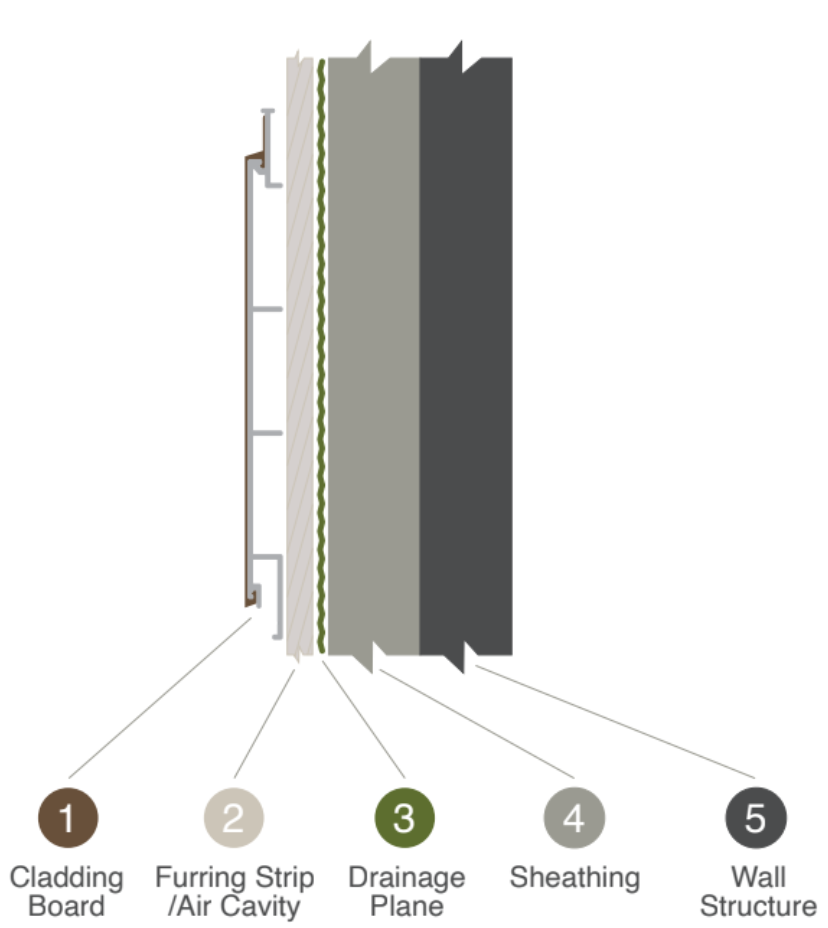
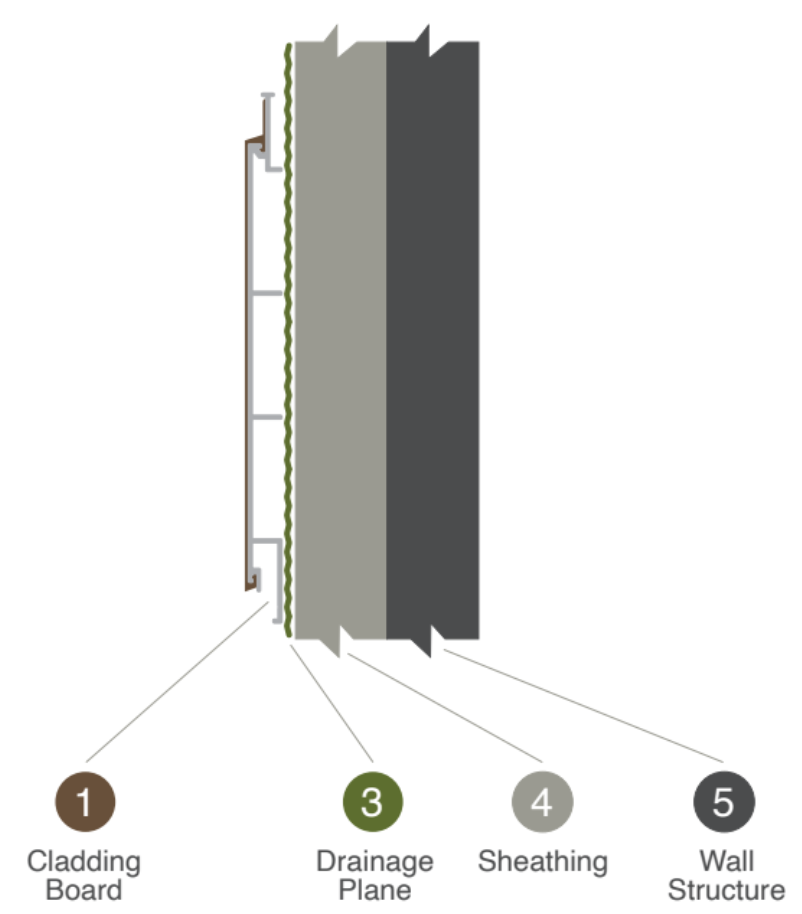
Ventilation: airflow dries the cavity. Drainage: water exits at the base. Both happen continuously, not just during rain.
1. Cladding panel: the visible, weather-facing surface. This is the co-extruded aluminum-core, WPC-faced board, mounted with a 3–12mm reveal between boards.
2. Air cavity and furring: a gap held open by furring strips or clips, deep enough for air to move freely behind the panel. Boards can also mount directly to a code-compliant substrate without furring where the assembly allows it.
3. Drainage plane: a water-resistive barrier (Tyvek, TYPAR, HydroGap, or Kingspan GreenGuard, among others) that stops anything from reaching the sheathing.
4. Sheathing: the structural panel the drainage plane is fastened over.
5. Wall structure: the studs or structural framing carrying the building’s load.
Moisture management: the top and bottom of the cavity are deliberately left unsealed, so air circulates continuously and any water that gets past the panel joints drains straight down and out, rather than pooling.
Not all aluminum cladding is the same.
Most aluminum cladding is metal with a painted, coated or printed finish. Vertigo 5010 has a real wood-composite face.
| Type | What it is | Typical finish | Where it’s used |
|---|---|---|---|
| Aluminum-core hybrid WPCGeolam Vertigo 5010 | Aluminum core co-extruded with a wood-fiber composite skin | Sanded, natural wood-grain texture | Rainscreen facades, soffits, ceilings |
| Solid aluminum sheet cladding | Single-skin flat or profiled panel | Mill, painted, or anodized | Industrial & commercial facades, canopies |
| Aluminum composite panel (ACP) | Two aluminum skins bonded to a polymer/mineral core | PVDF paint, powder coat, printed film | Mid- and high-rise commercial facades |
| Anodized aluminum cladding | Solid aluminum with an electrochemical oxide finish | Anodized (clear, bronze, black) | Architectural facades, storefronts, trim |
| Sublimated / printed aluminum | Solid aluminum with a printed wood-look finish | Printed film or dye-sublimation coating | Wood-look facades and soffits |
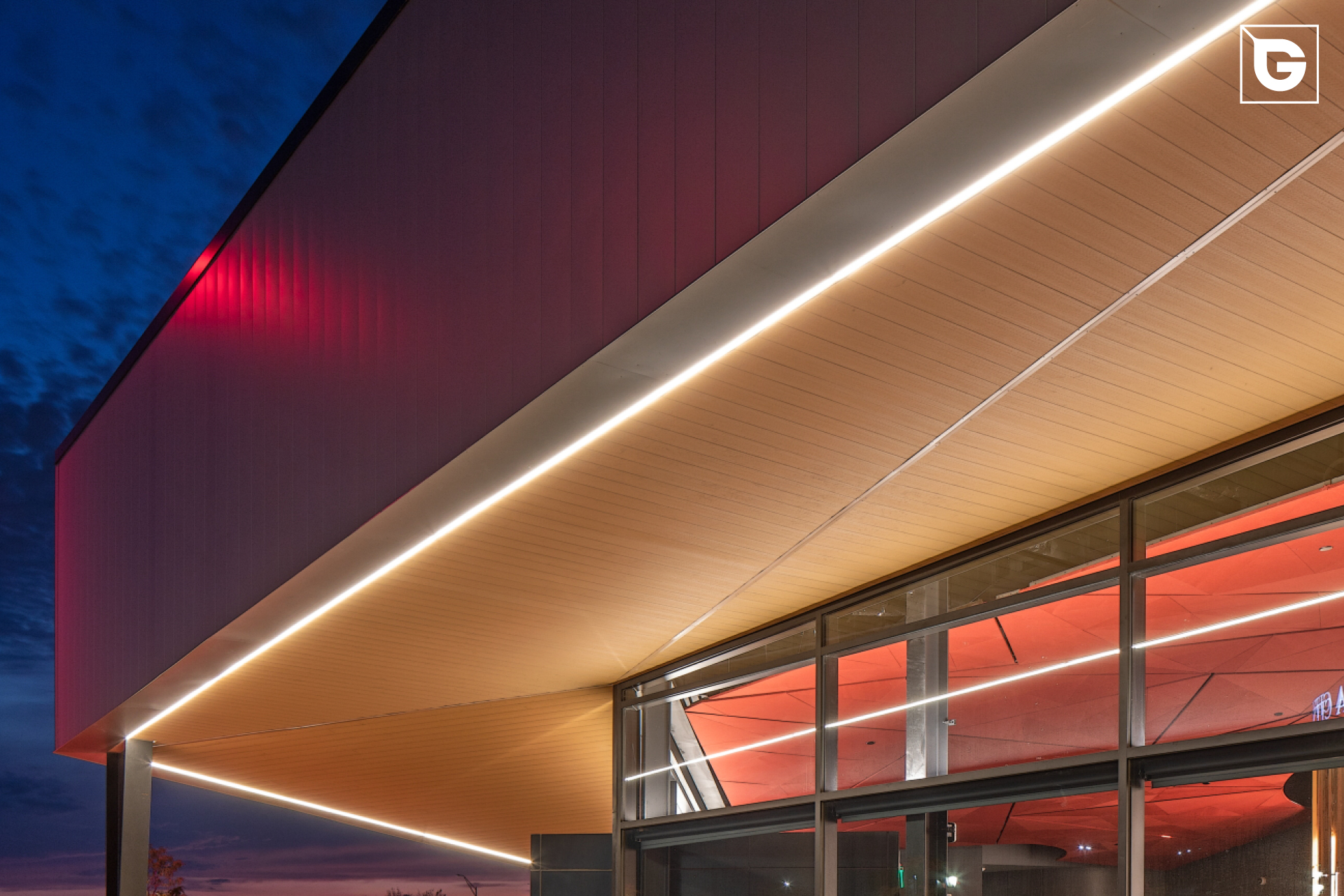
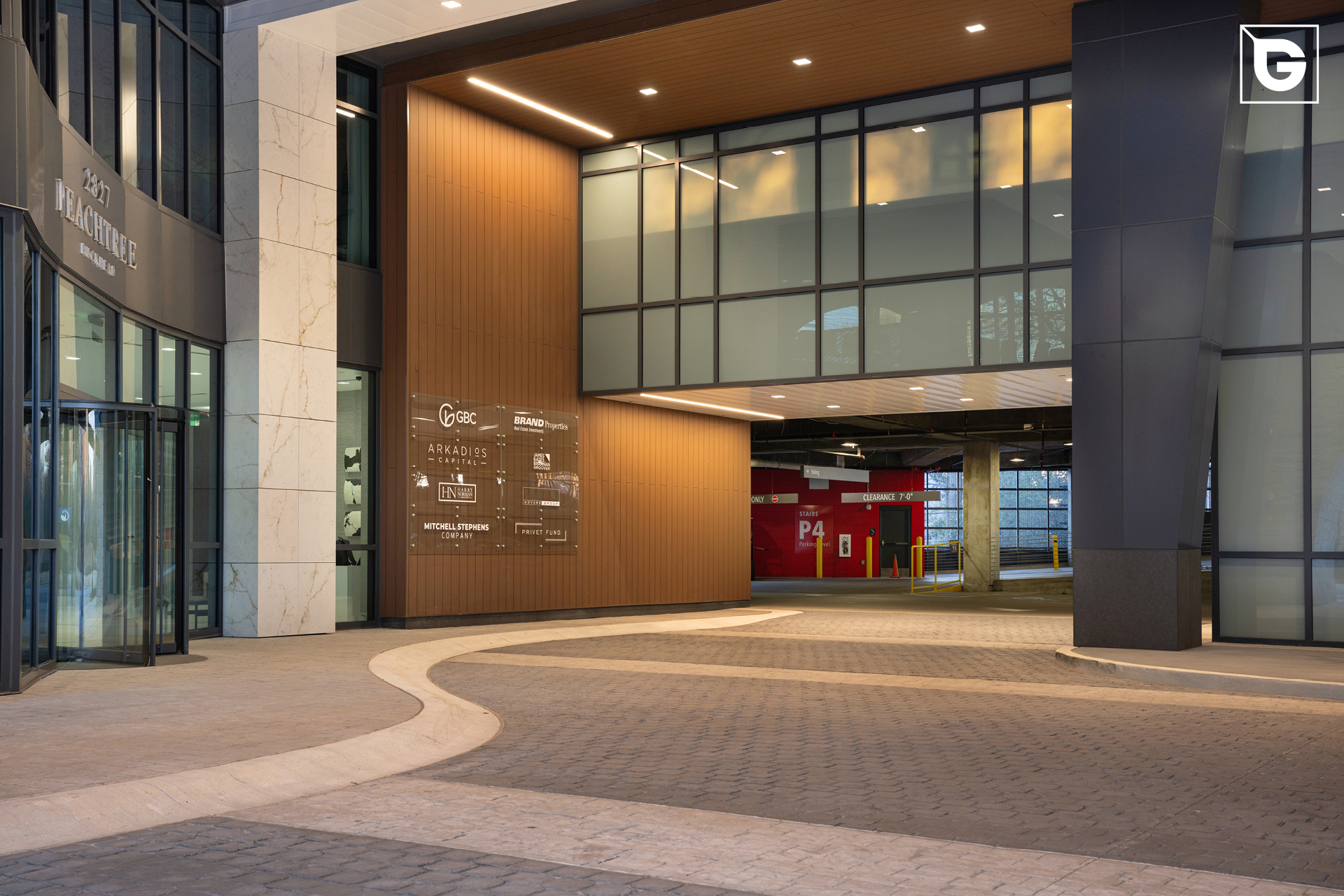
Built for the wall assembly, not just the surface.
Geolam’s Vertigo 5010 brings the warmth of real wood grain to a system engineered for building performance, trusted by architecture firms on hospitality, healthcare, education, and corporate projects across North America.
Get Your SamplesThe profile: Vertigo 5010
Geolam’s aluminum-core hybrid WPC cladding and soffit board, co-extruded and stocked in the USA. Not a solid aluminum panel.
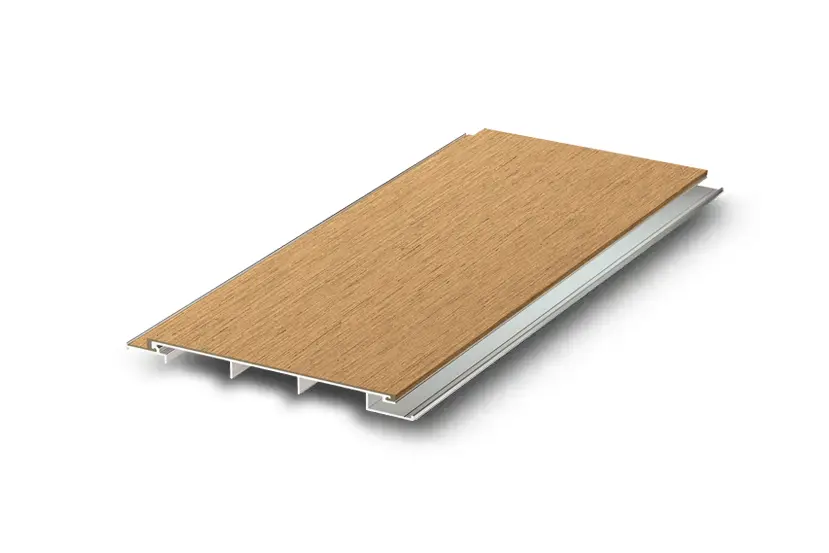
| Thickness | ½” | 13mm |
| Total width | 7¼” | 184mm |
| Usable width (exposure) | 6¼” | 160mm |
| Standard length | 12 ft | 3.66m |
| Custom lengths | 7 ft – 19’8″ | 2.15m – 6m |
| Weight | 0.80 lb/ft | 1.19 kg/ml |
| Fire rating | Non-combustible, ASTM E136 (appendix) |
| Core | Anodized aluminum alloy A6063S-T5 |
| Max tensile strength | 186 MPa |
| Modulus of elasticity | 68.9 GPa |
| Surface finish | Sanded (natural variation between runs) |
| Warranty | 10-year limited, non-prorated |
*Non-standard color, 90-day lead time, 5,000 lineal ft minimum.
Aluminum-Core Hybrid WPC vs. Solid Aluminum Cladding
Vertigo 5010 compared against sublimated / printed solid aluminum, the wood-look aluminum product it’s most often specified against and confused for.
| Parameter | Geolam Vertigo 5010 (Aluminum-Core Hybrid WPC) | Sublimated / Printed Solid Aluminum |
|---|---|---|
| Surface Appearance | ✓ Real sanded wood-composite face, natural grain variation. | ✗ Printed or film-transferred wood pattern over powder-coated metal. |
| Ease of Installation | ✓ Arrives jobsite-ready, with or without furring. | ✗ Field-cut unfinished ends and touch-up paint required. |
| Ongoing Maintenance | ✓ Soap-and-water cleaning only. | ✗ Manufacturer-specified annual cleaning schedule to preserve finish warranty. |
| Scratch Repair | ✓ Scratch-resistant; sandable to restore surface. | ✗ Printed finish scratches visibly; repairs are cosmetic touch-ups only. |
| Custom Lengths | ✓ Up to 19’8″ (6m). | ✗ Typically fixed 12’–24′ standard lengths. |
| Warranty Structure | ✓ 10-year non-prorated warranty on the full profile. | ✗ Metal often carries 50-year warranty, but printed finish warranty is commonly ~1 year under strict terms. |
| Fire Rating | ✓ ASTM E136 non-combustible. | ✓ ASTM E136 non-combustible. |
General comparison based on manufacturer spec sheets for each category; individual sublimated/printed aluminum products vary by brand.
Download the Full Materials Comparison GuideAn eco-friendly material built to outlast the building cycle it’s specified for.
Geolam’s hybrid construction starts with wood fiber dried to 0% moisture content before extrusion, the step that prevents the warping, mold, and mildew that shorten the life of ordinary wood-plastic composites. The result is composed of 70–80% recycled materials and is 100% recyclable at end of life, holding the Japan Environmental Association’s Eco-Mark certification and manufactured under ISO 9001 and ISO 14001 quality and environmental management systems.
The aluminum core adds a further layer to that: a structural element that’s infinitely recyclable in its own right, paired with an outer layer of eco-friendly polypropylene rather than PVC, producing no toxic fumes if it ever burns. For architects targeting LEED credits or a lower-carbon building envelope, that combination of recycled content, non-combustibility, and a 10-year warranty makes the material case, not just the aesthetic one.
Why specify a hybrid aluminum core over solid metal or plain wood?
Aluminum works well in exterior walls because it won’t rot or attract termites, and it holds its shape through seasonal changes in humidity. On its own, though, bare or painted metal rarely feels warm.
Vertigo 5010 solves this by putting the aluminum where it’s needed most: in the core, for strength and stability. The composite skin gives architects a real sanded, textured surface instead of a graphic printed on metal.
What upkeep actually looks like over 10, 20, 35 years.
Routine care is soap and water. Vertigo 5010 never needs staining, sealing or refinishing, and surface scratches can be sanded out rather than requiring board replacement, which isn’t true of most solid WPC products or painted or printed solid aluminum.
The aluminum core is what carries the long-term structural performance: it doesn’t rot, doesn’t attract termites or fungal decay, and doesn’t warp. That’s also why the 10-year warranty explicitly covers splitting, splintering, rot, and termite or fungal damage, not just surface appearance.
Built for more than one climate.
The ventilated cavity does most of the seasonal work. In freeze-thaw climates, trapped moisture behind cladding is what typically causes cracking as it repeatedly freezes and expands; the drainage plane and open cavity keep that moisture from accumulating in the first place.
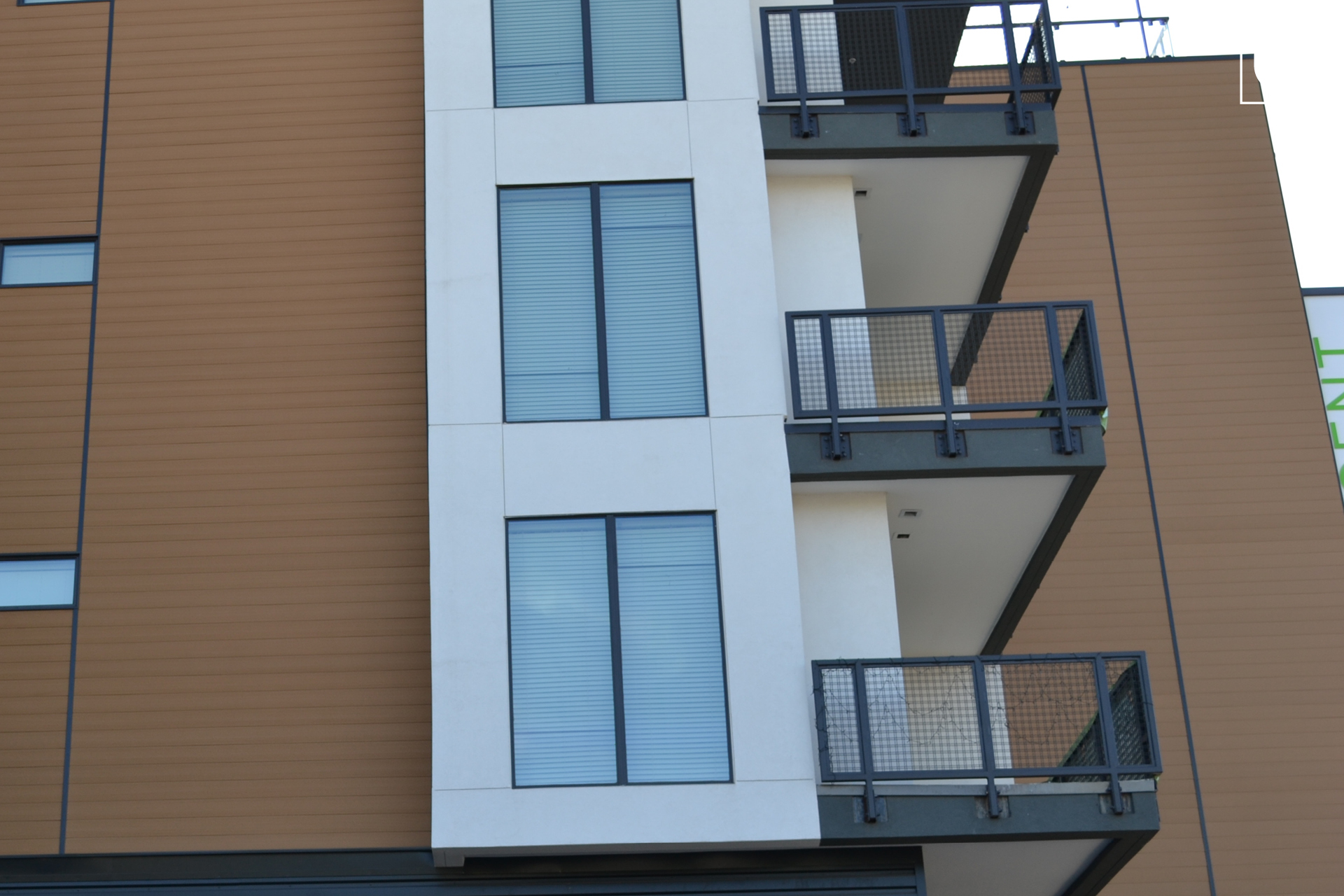
In hot, humid climates, like this Fort Worth, Texas installation, the same airflow that dries incidental rain also reduces the mold and mildew risk that comes with sustained humidity against a wall. In coastal or high-UV locations, the aluminum core resists the warping that solid wood or lower-grade composites can develop under repeated sun exposure, while the sanded finish is tested for color stability rather than fading unevenly over a single season.
Who makes Geolam aluminum cladding?
Geolam, Inc. is headquartered in Toronto, Ontario, and is the exclusive North American importer and distributor of Geolam® premium exterior building products manufactured in Japan. The underlying hybrid wood-aluminum technology was developed in Japan in the 1990s, solving a problem that had limited standard wood-plastic composites for decades: bonding wood fiber and plastic reliably by removing moisture from the wood before extrusion.
In 2012, Geolam introduced Wood Hybrid Systems (WHS), triple-extrusion profiles combining an aluminum core with a wood-composite skin, as the first product of its kind brought to the global market. As an aluminum cladding supplier focused on aluminum-core hybrid WPC profiles, Geolam stocks its standard colors in the USA with no minimum order.
Certifications & performance attributes
Moisture stays out of the wall
The ventilated cavity lets any incidental moisture drain and dry, protecting sheathing long-term.
Thermal performance
The air gap adds a break against conductive heat transfer through the assembly.
Code-friendly
ASTM E136 non-combustible, fits commercial rainscreen assemblies without a fire-rating workaround.
Field-adjustable reveal
3–12mm gap set on site per elevation, not locked at the factory.
Built with Geolam aluminum-core hybrid WPC
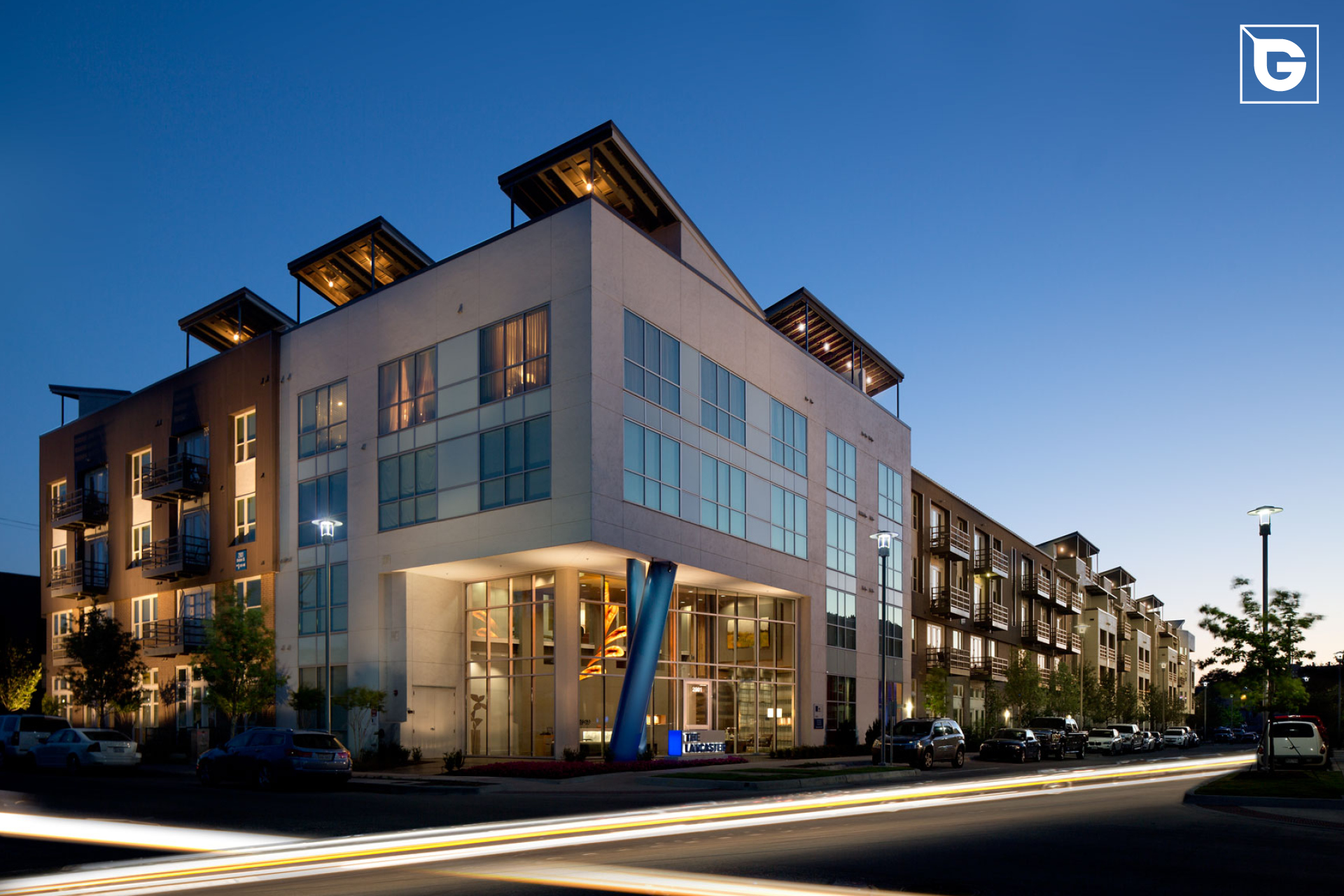
These projects span hospitality, office, residential, and public-building work. The gallery above is a small sample; Geolam’s full project archive includes more than 80 installations across North America.
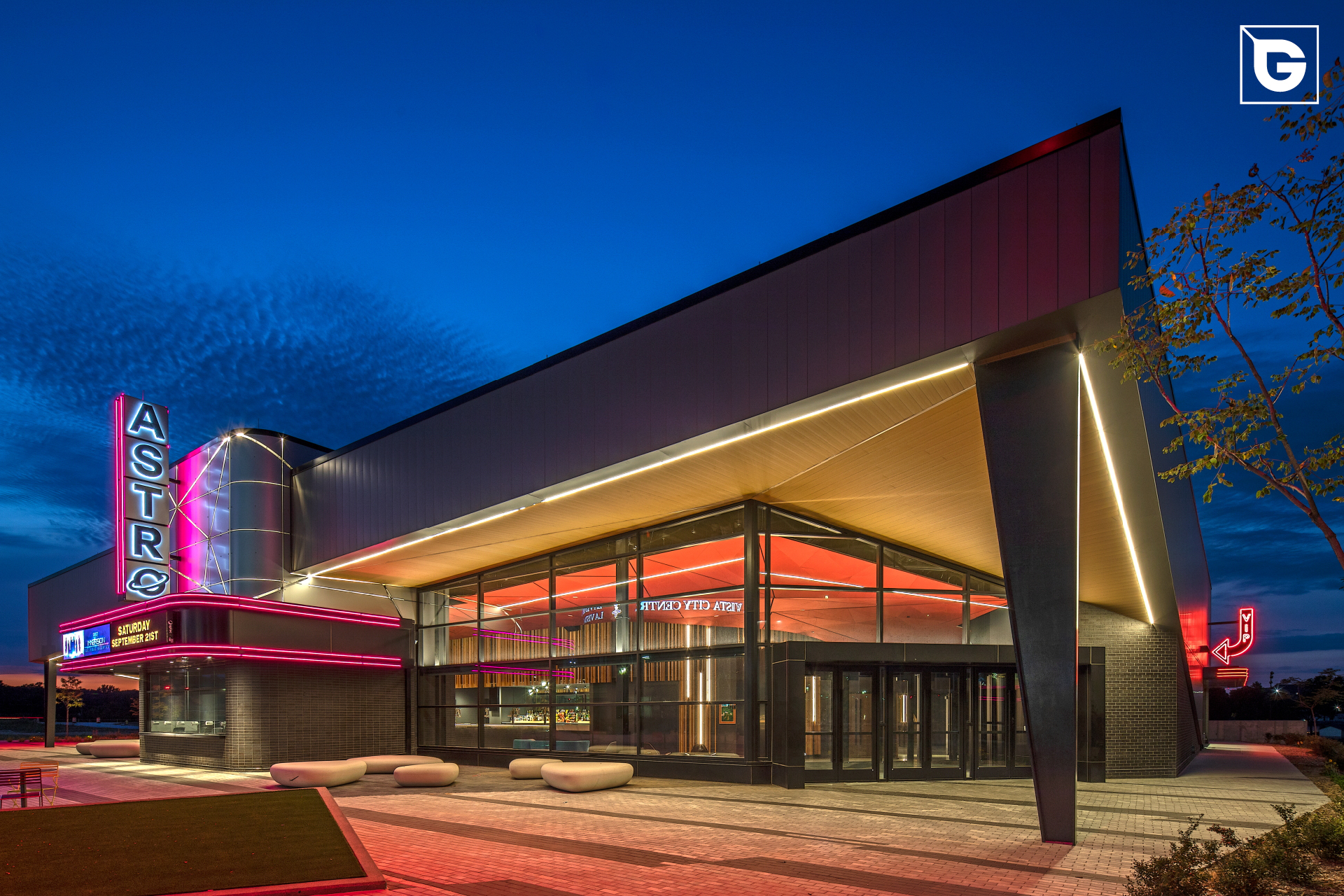 Astro Theater — NebraskaVertigo 5010, Teak — hospitality
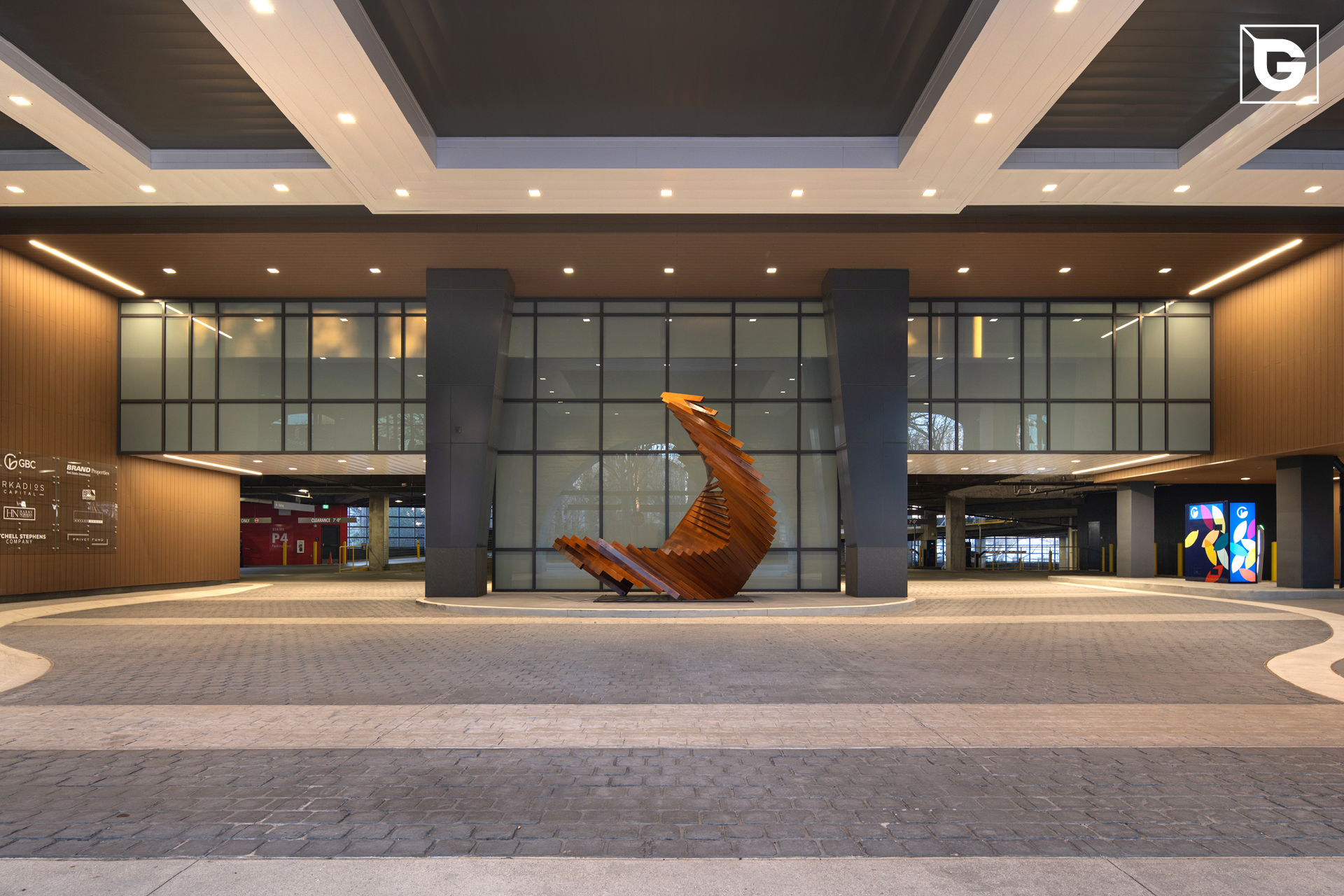 Garden Hills — GeorgiaVertigo 5010, Rosewood — office building
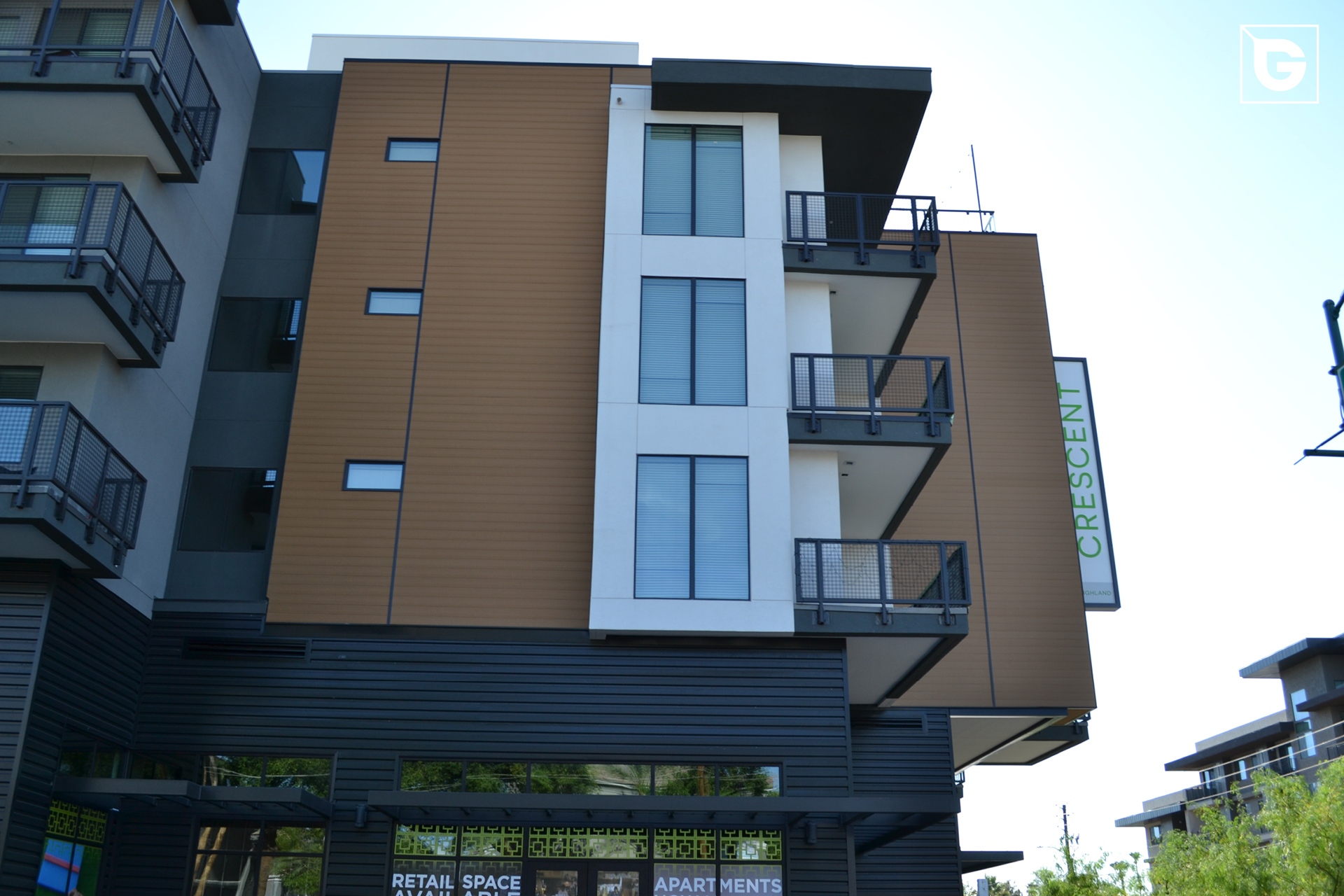 Crescent Highlands — ArizonaVertigo 5010, Teak — office building
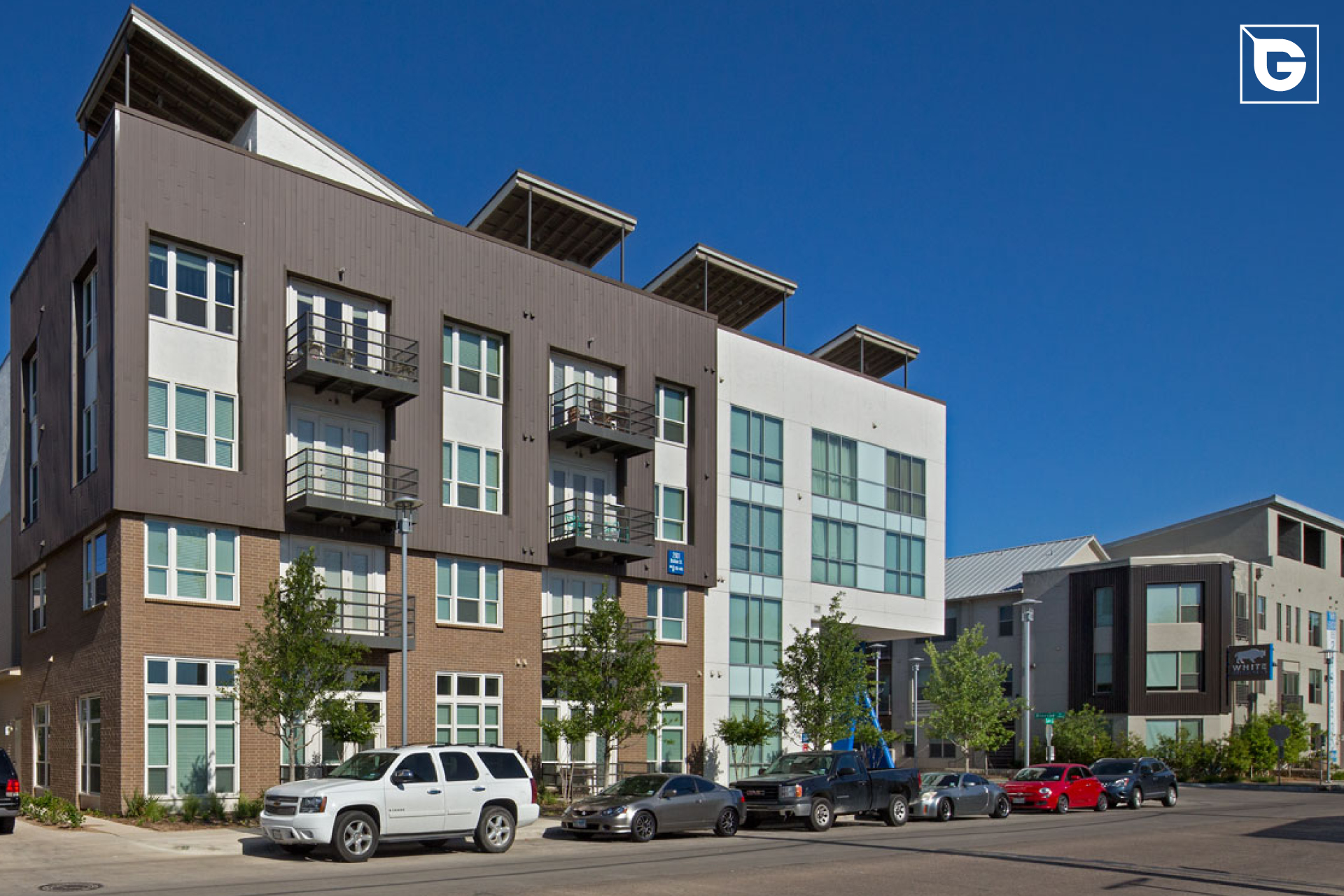 Multi-Unit Condominiums — Fort Worth, TXVertigo 5010, Ebony
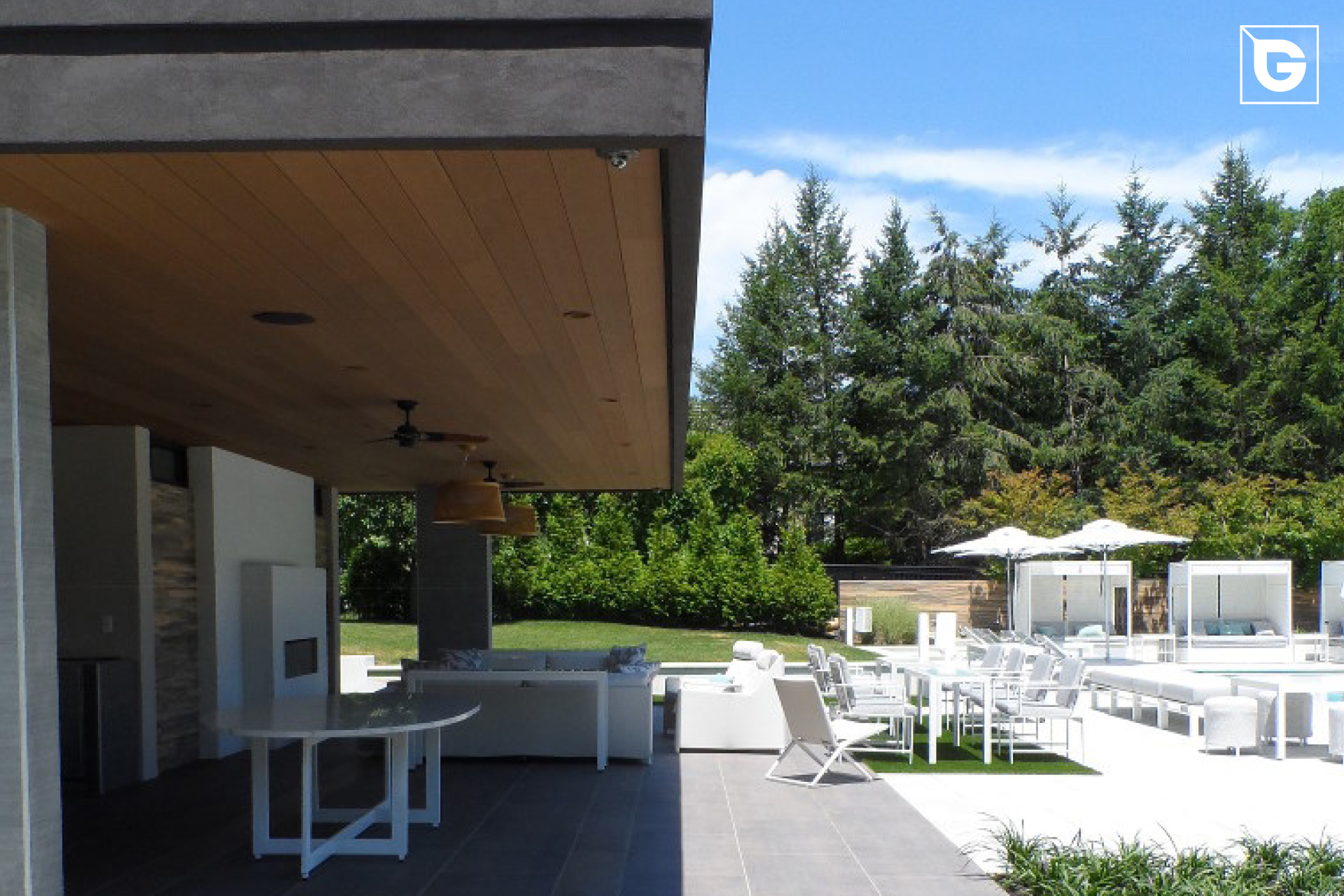 Oakhurst Cabana — New JerseyVertigo 5010, Teak — covered patio
These five installations span hospitality, office, residential and public-building work across five states, all documented Vertigo 5010 projects from Geolam’s gallery. The full archive includes more than 80 named commercial installations across North America.
See All Projects in the GalleryStandard finishes
Consistent across the Vertigo range.
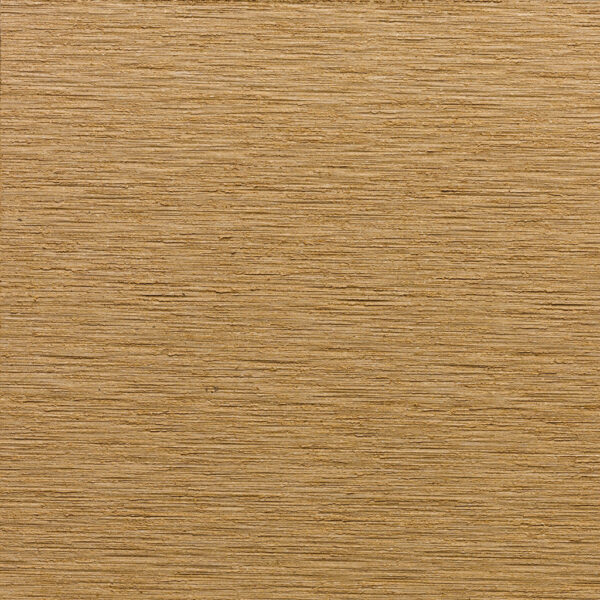
Teak
Warm, golden hardwood tone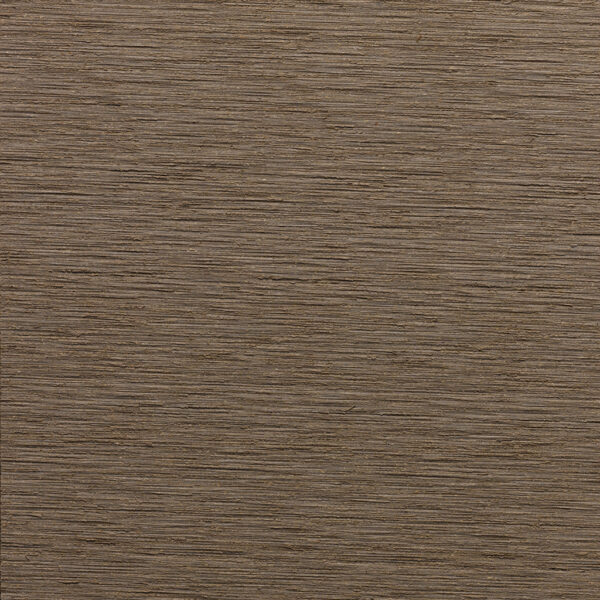
Moleskin
Cool, driftwood grey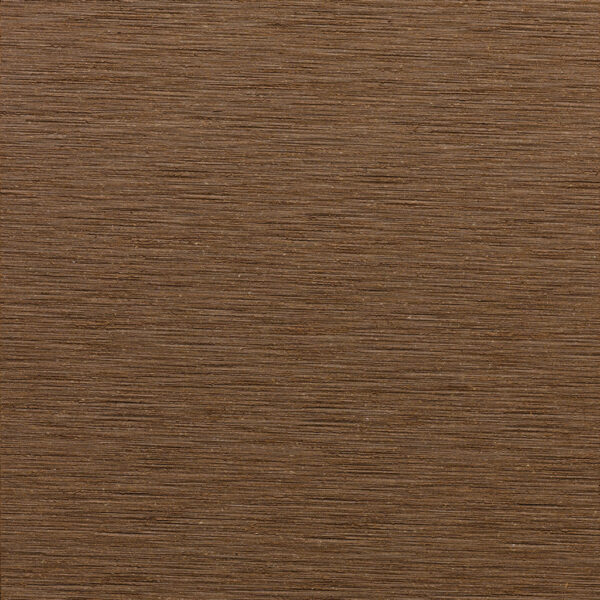
Rosewood
Deep reddish hardwood tone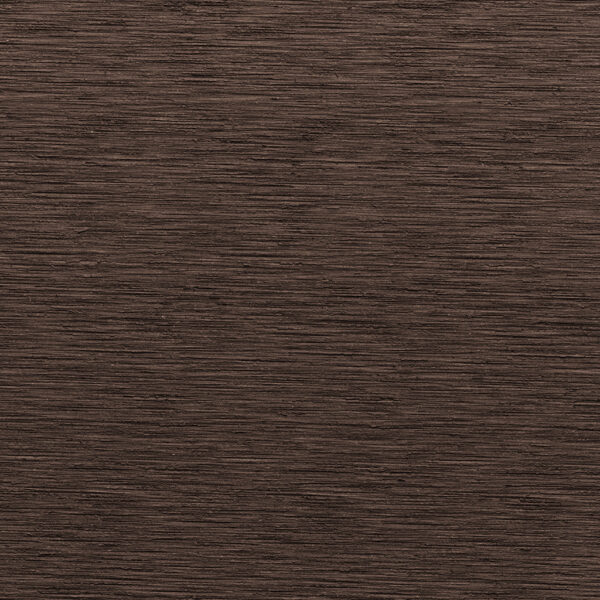
Ebony
Near-black, low-sheen finish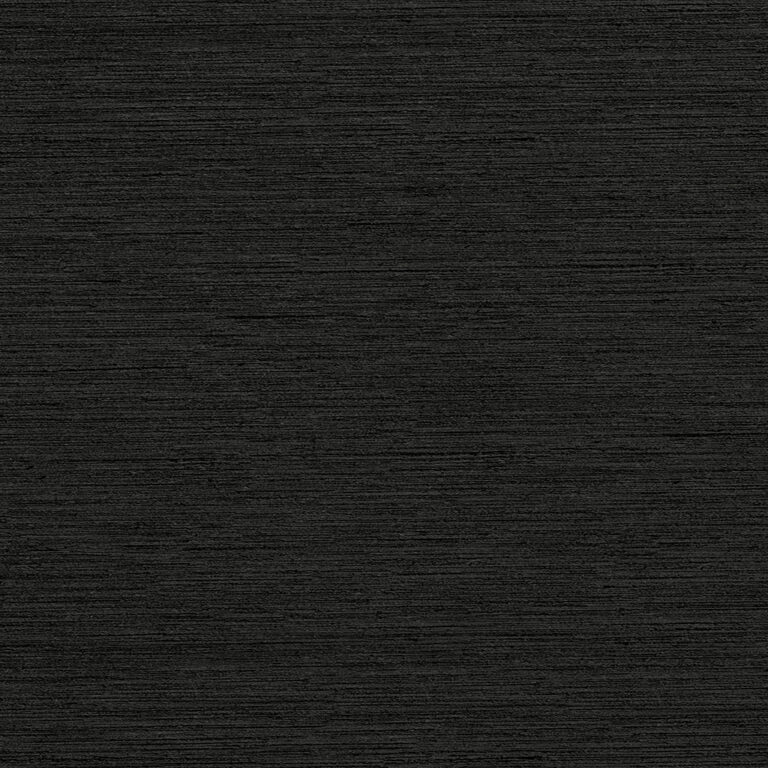
Carbon*
Deep matte black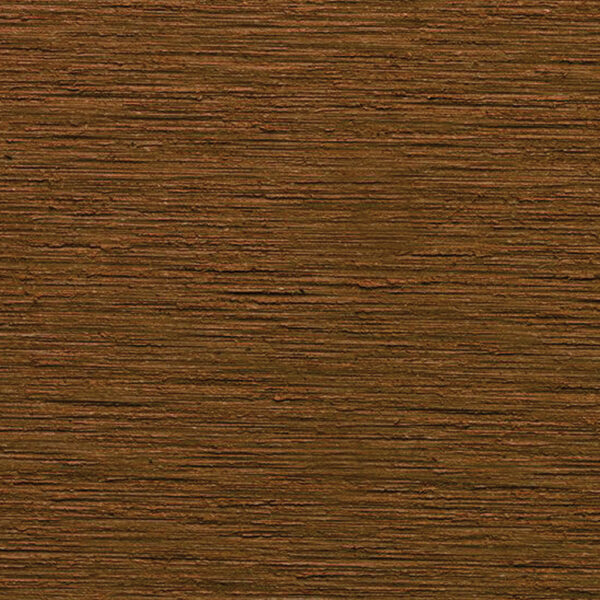
Bilinga*
Rich amber-brown hardwood tone*Non-standard color, 90-day lead time, 5,000 lineal ft minimum.
All four standard colors, Teak, Moleskin, Rosewood, and Ebony, are stocked in the USA with no minimum order, and ship with the same sanded surface finish across the range. Because the finish is genuinely sanded rather than printed, expect natural, authentic variation in grain and shading between production runs, the same way solid hardwood varies board to board.
Two additional colors, Carbon and Bilinga, are available as non-standard special orders with a 90-day lead time and a 5,000 lineal foot minimum; fully custom colors are available above a 6,000 lineal foot minimum. For color-critical projects, request a current physical sample rather than relying on a screen.
Request Physical Samples
See it in 3D
Rotate, zoom, and switch colors on a real render of Vertigo 5010 before you request a physical sample.
Colors
What affects the cost of this cladding?
Pricing varies too much by project to quote a single number honestly. Here’s what actually drives it.
Get a project-specific number
Send your elevation area, preferred finish, and location to your local rep for an accurate quote, no guessing from an online calculator.
Request a Quote Find Your Local RepWhat architects say
Architects on specifying Geolam Vertigo 5010.
“Given that the atrium would be susceptible to the elements and cars, Geolam was utilized for its durability and low maintenance.”
“Vertigo 5010 was the perfect product to navigate the complex geometries of the design with clean joinery and easy installation.”
“We loved the Vertigo 5010 for its ease of installation in both vertical and horizontal applications, as well as the clean integration with accent lighting.”
Aluminum cladding, common questions
Is this pure aluminum cladding?
No. Geolam’s Vertigo 5010 is an aluminum-core hybrid wood-plastic composite (WPC) cladding, an anodized aluminum alloy core (A6063S-T5) co-extruded with a wood-fiber composite skin. It is not a solid aluminum sheet, an aluminum composite panel (ACP), or a sublimated/printed aluminum finish.
What is “aluminum cladding” made of, in general?
It depends on the product. Solid aluminum cladding is a single or bonded aluminum sheet, sometimes painted or anodized. Aluminum composite panels sandwich a polymer or mineral core between two thin aluminum skins. Aluminum-core hybrid WPC profiles, like Geolam’s Vertigo 5010, are a different construction: an anodized aluminum alloy core co-extruded with a wood-fiber composite skin dried to near-zero moisture before extrusion.
Is aluminum cladding fire-resistant?
Fire performance varies by product, so check the test report for the exact system you are specifying. Vertigo 5010 is tested non-combustible under ASTM E136 and meets the IBC 2018 703.5.2 definition of composite noncombustible, a meaningfully higher bar than the Class A rating carried by most solid wood-plastic composites. Always confirm the rating and testing documentation for the exact product being specified.
How is aluminum wall cladding installed?
Most systems mount over furring or directly to a drainage-plane-covered substrate, fastened with corrosion-resistant screws at a maximum spacing (commonly 24″ on center), with a small reveal gap left between boards and a slightly larger expansion gap at butt joints. The exact fastener type, spacing, and reveal should follow the manufacturer’s current installation guide.
How do you clean aluminum cladding?
Routine cleaning is soap and water, similar to washing a car. Products with a painted or printed finish typically need a stricter cleaning schedule to preserve their finish warranty; hybrid profiles with a sanded composite face generally don’t require any refinishing or sealing cycle at all.
Does aluminum cladding scratch or dent easily?
Solid aluminum can dent under impact, and painted or printed finishes tend to show scratches clearly since damage exposes the coating underneath. A sanded composite-faced hybrid profile is comparatively scratch-resistant, and surface damage can be sanded out to repair a panel instead of replacing it.
How long does aluminum cladding last?
The aluminum core itself is effectively permanent under normal exposure, it doesn’t rot, rust the way steel does, or attract pests. The finish varies more by type: printed or film finishes on solid aluminum are commonly warrantied around a year under strict maintenance terms even though the metal substrate carries a much longer warranty, while a hybrid aluminum-composite profile is typically warrantied for a decade against splitting, rot, and pest damage as a full assembly.
Can aluminum cladding be used on both residential and commercial buildings?
Yes. Aluminum cladding panels show up on single-family residential exteriors, multi-family developments, and commercial or institutional buildings alike. Commercial and institutional projects more often require the non-combustible fire rating aluminum-core systems can provide, while residential aluminum cladding panels are usually chosen for low maintenance and long-term durability.
What’s the difference between aluminum cladding and aluminum composite panels (ACP)?
“Aluminum cladding” is the broader category. Aluminum composite panels are one specific construction within it, two aluminum skins bonded to a polymer or mineral core, typically used on larger commercial facades. Solid aluminum sheet, anodized aluminum, and aluminum-core hybrid WPC profiles are other constructions inside the same category, each with different weight, cost, and appearance trade-offs.
Can aluminum cladding be installed on a patio, canopy, or non-residential structure?
Yes. Non-combustible aluminum cladding is a common choice for entry canopies, covered patios, and other structures that are directly weather-exposed without full building envelope protection behind them, provided the fastening system and drainage detailing are still followed even where there’s no interior wall assembly.
Does aluminum cladding come in wood-look finishes?
Yes, two different ways. Solid aluminum panels can be printed or sublimated with a wood-grain graphic. Hybrid profiles achieve a wood look differently, by bonding an actual wood-fiber composite skin to the aluminum core and sanding it, producing a textured, grained surface rather than a printed image on metal.
Who should I contact for aluminum cladding pricing or samples?
Because material selection, finish, project size, and lengths all move the price, request a quote from Geolam or your local Geolam sales representative with your elevation area, preferred finish, and location, and ask for a physical sample before finalizing a color, screen renderings don’t reproduce a sanded or metallic finish accurately.
Ready to see it in hand?
Order a physical sample box, or get a project quote from your local Geolam representative.
