
Composite Cladding
Composite cladding pairs a wood-fiber face with a polymer binder for a stable, low-maintenance exterior finish. Vertigo 5010 adds a co-extruded aluminum core, tested non-combustible to ASTM E136, under a sanded natural wood grain.
An engineered material category, not one single product.
Composite cladding is any exterior wall or soffit panel made by combining wood fiber with a polymer binder into a single engineered material, commonly called WPC (wood-plastic composite). Standard composite cladding boards and composite cladding panels use that combination alone. Aluminum-composite cladding adds a co-extruded metal core beneath the same wood-fiber face, a distinct construction rather than a variation of the same product.
Vertigo 5010 is Geolam’s aluminum-core hybrid WPC: an anodized aluminum core hot co-extruded with a wood-composite face, sanded rather than printed for a natural wood grain. It’s a cladding composite designed for exterior rainscreen and soffit use, and it meets the IBC 2018 definition of “composite noncombustible.”
Engineered, not solid wood
Wood fiber and polymer combined into one composite material.
Aluminum-reinforced
A co-extruded core, not a coating or laminate.
Non-combustible
ASTM E136 tested, a step beyond a Class A flame-spread rating.
10-year warranty
Non-prorated, limited.
How it’s made, and how it goes up.
The manufacturing process sets a composite’s fire and moisture performance. The installation method sets drainage, airflow and the look of the finished reveal.
How composite cladding is made: wood fiber is dried to 0% moisture, then combined with a polymer binder. In Geolam’s aluminum-composite construction, the wood-composite layer and an anodized aluminum core are hot co-extruded together with an olefin resin bonding layer between them, and the visible face is sanded to expose natural grain rather than printed.
How to install composite cladding: Vertigo 5010 mounts horizontally, vertically or diagonally, either directly over a code-compliant air barrier or on furring strips, with a drainage plane recommended behind the boards for airflow and water drainage. Composite cladding installation uses stainless steel screws at a maximum of 24 in. (610 mm) on center and a 1/8 in. (3 mm) gap at butt joints; a color-matched two-piece J-trim can cover exposed screws on the final board.
Composite cladding covers more ground than most people assume.
How the main composite types compare, with Geolam’s aluminum-core hybrid WPC highlighted.
| Type | Construction | Where it’s used |
|---|---|---|
| Aluminum-core hybrid WPCGeolam makes this one | Wood fiber + polymer, hot co-extruded with an aluminum core | Rainscreen facades, soffits, feature walls |
| Solid WPC composite | Wood fiber + polymer throughout, no metal core | Cladding, fencing and other exterior uses |
| PVC composite cladding | Polymer-dominant, minimal or no wood content | Budget residential siding |
| Fiber-cement composite | Cement, sand and cellulose fiber | Larger commercial elevations |
General category patterns; performance varies by manufacturer.
Composite cladding materials fall into a few broad groups. Solid WPC boards offer real advantages over solid wood, including better moisture resistance and lower upkeep, but they typically carry a Class A flame-spread rating rather than a non-combustible classification, and usually have a subtler, brushed surface. PVC composites trade wood content for cost, while fiber-cement composites trade weight and installation complexity for a non-combustible core of their own.
Geolam’s aluminum-composite construction closes that gap: a sanded wood-fiber face with authentic grain and color variation over an aluminum core that carries a non-combustible classification per ASTM E136 (appendix). Whether it’s specified as composite external wall cladding or as a soffit profile, it’s the same board.


One composite, every application it covers.
Wood look, fire rating, soffits, or replacing failed cladding: the same composite wall cladding profile covers each of these applications.
Get Your SamplesThe profile: Vertigo 5010
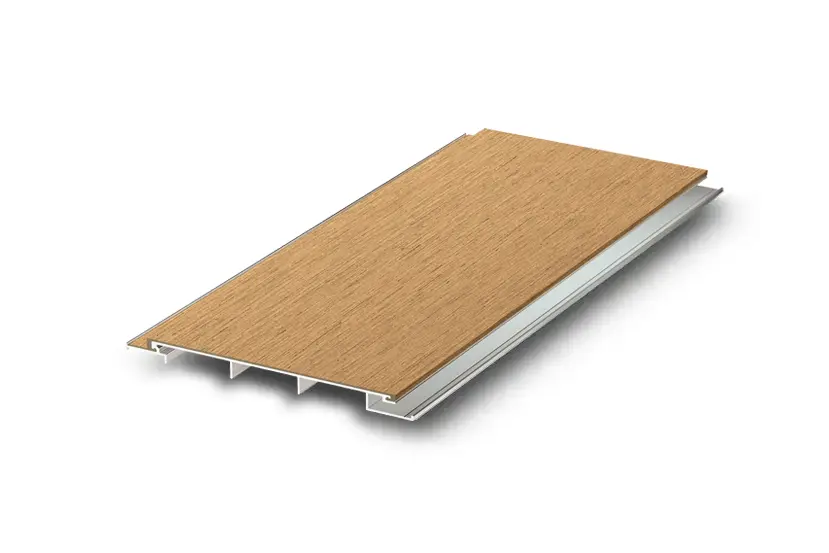
Geolam’s aluminum-core hybrid composite exterior cladding board, a wide-slat plank profile stocked in the USA.
| Thickness | ½” | 13mm |
| Total width | 7¼” | 184mm |
| Usable width (exposure) | 6¼” | 160mm |
| Standard length | 12 ft | 3.66m |
| Custom lengths | 7 ft – 19’8″ | 2.15m – 6m |
| Weight | 0.80 lb/ft | 1.19 kg/ml |
| Fire rating | Non-combustible, ASTM E136 (appendix) |
| Core | Anodized aluminum alloy A6063S-T5 |
| Fastening | Stainless steel screws, max. 24 in. (610 mm) o.c. |
| Orientation | Horizontal, vertical or diagonal |
| Warranty | 10-year limited, non-prorated |
*Non-standard color, 90-day lead time, 5,000 lineal ft minimum.
Specify with confidence
Documentation for Vertigo 5010 and the composite cladding systems built around it.
Aluminum-Composite vs. Standard WPC Composite
Vertigo 5010 compared with typical solid WPC composite cladding products (wood-plastic composite without a metal core).
| Parameter | Geolam Vertigo 5010 (Aluminum-Composite) | Typical Solid WPC (No Core) |
|---|---|---|
| Core Construction | ✓ Hot co-extruded aluminum core with a wood-composite face. | ✗ Solid WPC throughout, no metal core. |
| Fire Classification | ✓ Non-combustible per ASTM E136 (appendix). | ✗ Typically Class A flame spread, not non-combustible. |
| Aesthetic | ✓ Real wood fiber with natural grain and color variation. | Typically a subtler, brushed texture. |
| Installation | ✓ Mounts with or without furring. | ✗ Often requires furring strips and clips. |
| Maintenance | ✓ No refinishing; clean only when dirty. | No refinishing, but regular cleaning is often needed to keep the warranty. |
| Custom Lengths | ✓ Up to 19 ft 8 in (6 m). | Often limited to 12 ft standard lengths. |
| Warranty | ✓ 10-year, non-prorated. | Commonly 5 years. |
Based on Geolam’s published comparison with solid WPC; individual products vary by manufacturer.
Download the Full Materials Comparison GuideWhat the aluminum core adds that composite alone can’t.
Wood fiber dried to 0% moisture before extrusion, hot co-extruded with an anodized aluminum core, gives Vertigo 5010 a durable, stable profile. The result is 70–80% recycled content, fully recyclable, certified under the Japan Environmental Association’s Eco-Mark and made to ISO 9001/14001 standards.
For architects specifying composite exterior wall cladding on institutional or commercial buildings, the combination of a genuine wood-grain appearance and a non-combustible core is often decisive over a standard composite alternative.
Why choose an engineered composite over a solid material at all?
Solid wood offers genuine grain but demands ongoing upkeep and fails unevenly by species and cut. Solid aluminum offers durability but reads as unmistakably metallic, without much appearance choice. External composite cladding exists precisely to combine what each does well: a wood-composite face for aesthetic warmth, engineered into a material that doesn’t inherit solid wood’s maintenance burden.
Adding an aluminum core extends the trade further: the same composite face, on a core that carries an ASTM E136 non-combustible classification and doesn’t rot or attract termites the way wood can.

What low-maintenance actually means for composite cladding.
“Low-maintenance” means different things depending on whether the finish is sanded into the material or applied on top of it. On this composite wood cladding, routine care is soap and water, with no staining, sealing or repainting cycle, because the sanded wood-composite surface is the finish itself.
Surface damage can be sanded out to repair a board instead of replacing it, and the 10-year warranty covers splitting, rot, and termite or fungal decay.
How composite cladding holds up to weather.
Any composite facade cladding weathers to some degree; what matters is how evenly. Vertigo 5010’s finish is tested for weather resistance under DIN ISO 16474-2 and JIS A 1415 (5,000 hours), for salt-spray corrosion under DIN EN ISO 9227, and for color stability under JIS K5400.
Like any exterior material, the boards move slightly with temperature, so the installation guide calls for a 1/8 in. (3 mm) gap at butt joints. The wood fiber is dried to 0% moisture before extrusion, so the board isn’t subject to the moisture cycling that untreated wood goes through.

Who makes this composite cladding system?
Geolam, Inc. is headquartered in Toronto, Ontario, and is the exclusive North American importer and distributor of Geolam® architectural building products manufactured in Japan. The co-extrusion technology behind Vertigo 5010, wood fiber and polymer engineered around an aluminum core in one continuous process, was developed in Japan in the 1990s.
Wood Hybrid Systems, the triple-extrusion process behind that construction, reached the global market in 2012. Geolam, Inc. is SAM.gov registered for U.S. government work and keeps standard Vertigo 5010 colors stocked in the USA.
Certifications & performance attributes
Real wood-fiber face
This composite plank cladding is sanded, not printed, for genuine wood grain.
Non-combustible
ASTM E136 tested, a step beyond a Class A flame-spread rating.
Tested performance
ASTM E136 fire, DIN ISO 16474-2 weathering and JIS K5400 color stability.
10-year warranty
Non-prorated, on the full aluminum-composite profile.
Built with this composite cladding system
Explore projects using this composite plank exterior cladding across North America.
 Hill Center Greenwood — TennesseeVertigo 5010, Teak — office building
 PF Chang’s — MissouriVertigo 5010, Rosewood — hospitality
 City Gym — MissouriVertigo 5010, Rosewood — office building
 Mapco — AlabamaVertigo 5010, Teak — public building
 McDonald’s — New YorkVertigo 5010, Rosewood — hospitality
These five installations are documented Vertigo 5010 projects from Geolam’s project gallery. The full archive includes more than 80 named commercial installations across North America.
See All Projects in the GalleryStandard finishes & profile
One wide-slat plank profile, six wood-look tones.
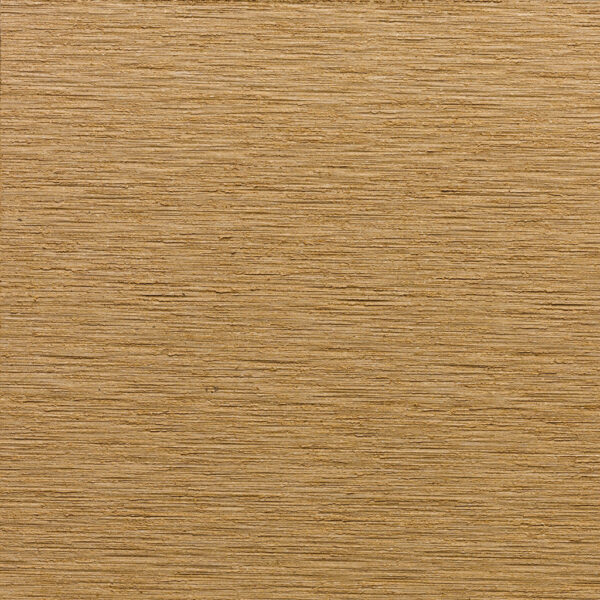
Teak
Warm, golden hardwood tone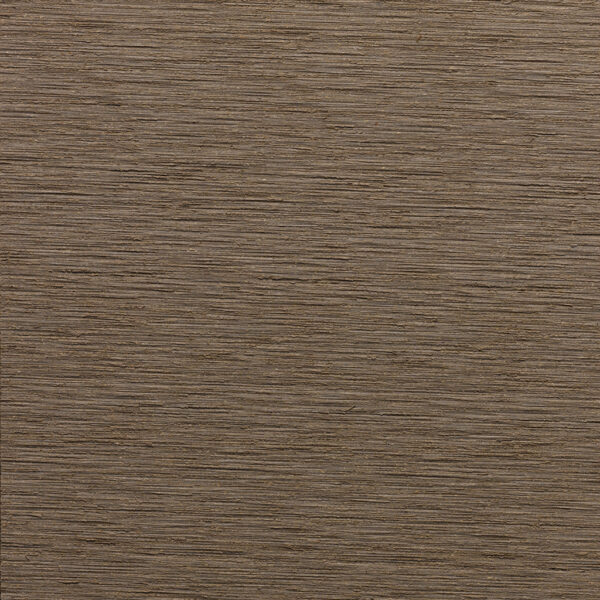
Moleskin
Cool, driftwood grey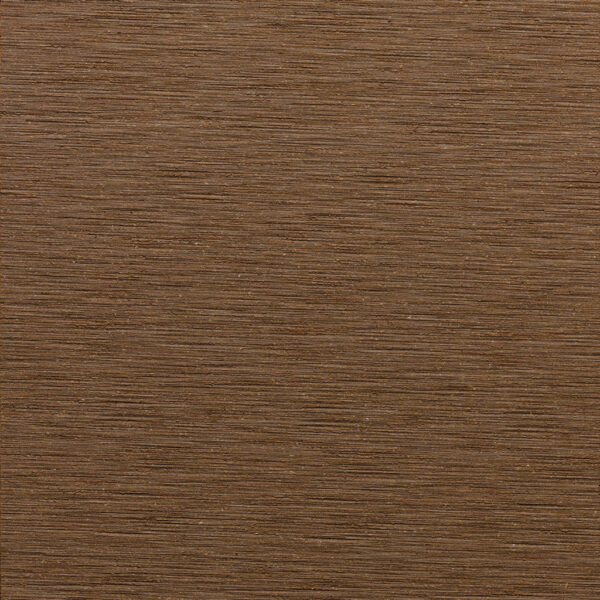
Rosewood
Deep reddish hardwood tone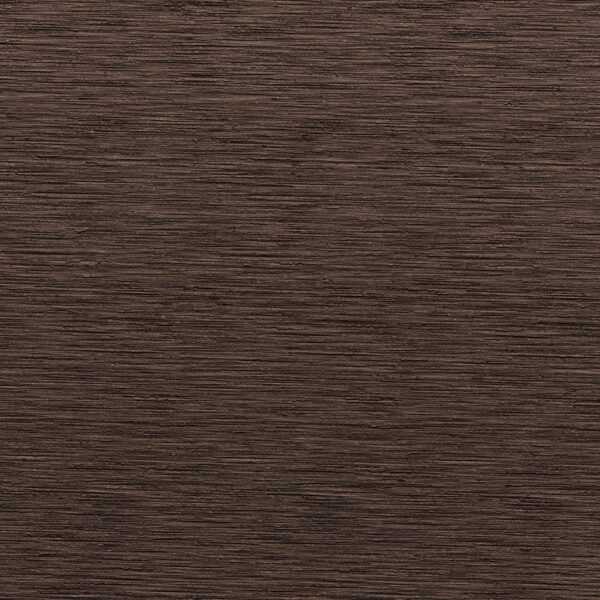
Ebony
Near-black, low-sheen finish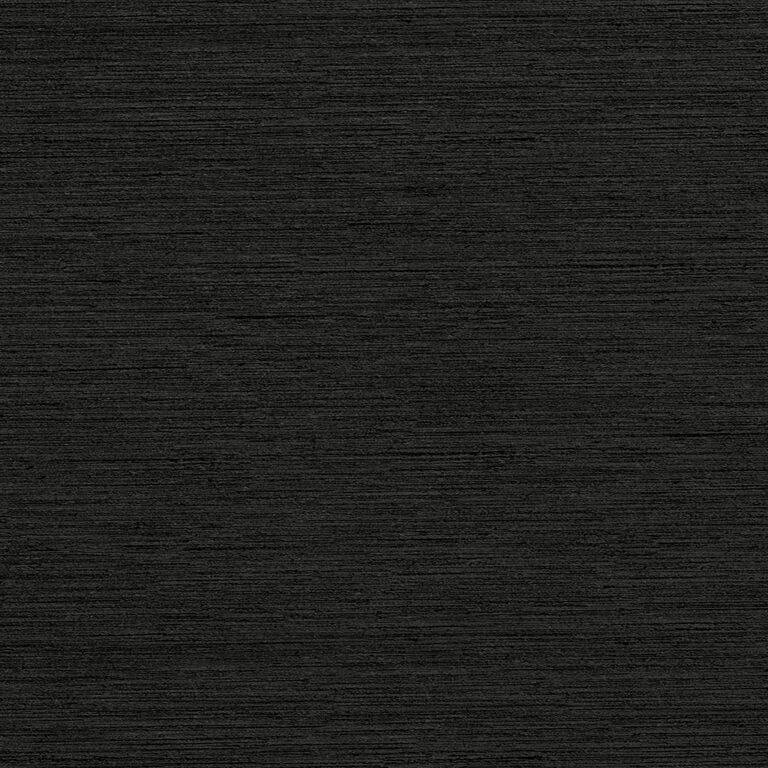
Carbon*
Deep matte black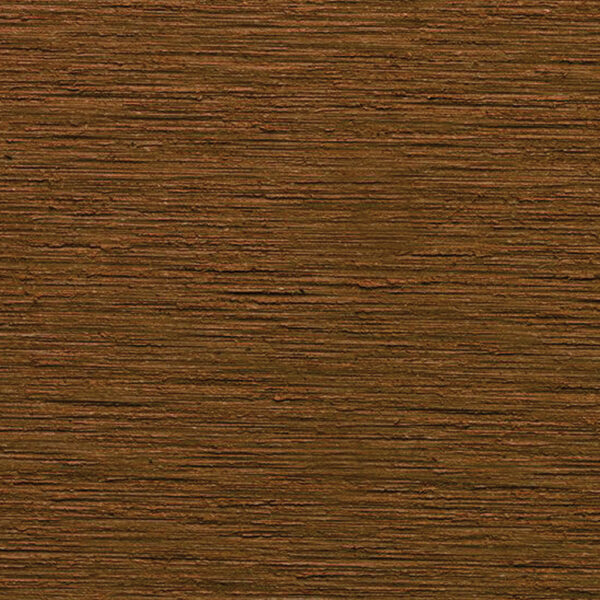
Bilinga*
Rich amber-brown hardwood tone*Non-standard color, 90-day lead time, 5,000 lineal ft minimum.
As a composite wide slat exterior cladding, Vertigo 5010 has a 6¼ in. usable exposure that reads as a substantial, contemporary reveal rather than a narrow-slat or lap look, with the reveal between boards designed anywhere from 1/8 in. to 7/16 in. (3–12 mm). All four standard colors, Teak, Moleskin, Rosewood, and Ebony, carry the same sanded finish and are stocked in the USA with no minimum order.
Carbon and Bilinga are special-order colors with a 90-day lead time and a 5,000 lineal foot minimum. The wood texture, sanding finish and shading can vary between production runs, so request a physical sample before committing a full elevation.
Request Physical Samples
See it in 3D
Rotate, zoom, and switch colors on a real render of Vertigo 5010 before you request a physical sample.
Colors
What affects composite cladding cost?
What a composite cladding exterior costs depends on the project. Here’s what actually drives it.
Get a project-specific number
Send your elevation area, preferred finish, and location to your local rep for an accurate quote, no guessing from an online calculator.
Request a Quote Find Your Local RepWhat architects say
Architects on specifying Geolam Vertigo 5010.
“Given that the atrium would be susceptible to the elements and cars, Geolam was utilized for its durability and low maintenance.”
“We chose Vertigo 5010 for the soffits because it has the aesthetics of wood with zero maintenance.”
“We loved the Vertigo 5010 for its ease of installation in both vertical and horizontal applications, as well as the clean integration with accent lighting.”
Composite cladding, common questions
What is composite cladding?
Composite cladding is exterior wall or soffit paneling made by engineering wood fiber and a polymer binder into a single material, commonly called WPC (wood-plastic composite). Some composite cladding, including Geolam’s Vertigo 5010, adds a co-extruded aluminum core to that construction for additional structural and fire performance.
What is composite cladding made of?
At its base, composite cladding combines wood fiber with a polymer binder. Geolam’s composite uses polypropylene rather than PVC. Aluminum-composite variants add an anodized aluminum core, hot co-extruded with the wood-composite face in one continuous manufacturing process.
What are the benefits of composite cladding?
Compared to solid wood, composite cladding generally offers better moisture resistance, a longer service life and less recurring maintenance, since the wood fiber is engineered into a stable material. Aluminum-composite constructions add ASTM E136 non-combustible fire performance, which a standard solid composite typically doesn’t carry.
Is composite cladding durable?
Durability depends on the construction and the manufacturer. Solid WPC is a proven exterior material, but its warranty terms and fire performance vary widely. Vertigo 5010 pairs a co-extruded aluminum core with a wood-composite face and is backed by a 10-year non-prorated limited warranty covering splitting, rot, and termite or fungal decay.
Is composite cladding fire resistant?
It depends on the specific product. Many standard composites carry only a flame-spread rating, or no fire testing at all. Aluminum-core hybrid composites, including Vertigo 5010, are tested non-combustible under ASTM E136, a stricter classification than a flame-spread rating alone.
Is composite cladding non-combustible?
Not automatically. Whether a composite cladding product is non-combustible depends entirely on its construction, specifically whether it includes a non-combustible core like aluminum. Ask any manufacturer for their actual ASTM E136 test report rather than assuming from the word “composite” alone.
Can composite cladding be used outdoors?
Yes, that’s its primary application. Composite cladding is engineered specifically for exterior walls and building exteriors, where it needs to resist moisture, UV exposure, and temperature swings over years of use, performance requirements a raw, untreated wood board doesn’t meet on its own.
Can composite cladding be used on exterior walls?
Yes, exterior wall cladding is the primary use case for composite panels, on commercial buildings, residential buildings, and institutional buildings alike. The same material is also commonly used for soffits and, on some profiles, interior feature walls.
Can composite cladding be used for a rainscreen?
Yes. Vertigo 5010 is designed for exterior rainscreen use. The installation guide recommends a drainage plane behind the boards to allow airflow and water drainage, so any moisture that gets past the cladding can drain and dry instead of sitting against the building.
How is composite cladding installed?
Vertigo 5010 can be mounted horizontally, vertically or diagonally, directly over a code-compliant air barrier or onto furring strips. Geolam recommends a drainage plane behind the boards and advises against sealing the top or bottom of the wall so air can circulate. Boards are fastened with stainless steel screws at up to 24 in. on center, with a 1/8 in. gap at butt joints, and a color-matched J-trim can cover exposed screws on the final board.
Does composite cladding require painting or staining?
It depends on the finish. If the wood-look surface is genuinely part of the composite, sanded rather than painted, no staining or sealing schedule is required. Vertigo 5010’s routine care is soap and water only, with no refinishing cycle to plan around.
How does composite cladding compare with wood?
Solid wood offers genuine, unengineered grain but requires ongoing staining or sealing and is prone to rot, checking, and insect damage without that upkeep. Composite cladding trades a small amount of that raw authenticity for engineered consistency, less maintenance, more predictable weathering, and, in aluminum-composite constructions, a non-combustible rating solid wood can’t offer.
How does composite cladding compare with aluminum?
Solid or printed aluminum cladding is inherently non-combustible and extremely durable, but reads as metallic and offers a wood look only through a printed or dye-sublimated coating. Aluminum-composite cladding like Vertigo 5010 combines both: an aluminum core for the same structural and fire performance, wrapped in a genuinely sanded wood-fiber face rather than a graphic applied to bare metal.
Can composite cladding be used for façades?
Yes, façade cladding is one of the most common applications for composite panels, on new construction and retrofit projects alike. The same profile typically works across a full facade system, from ground-floor storefronts to upper-story elevations.
What colors and finishes are available?
Vertigo 5010 ships in four standard colors, Teak, Moleskin, Rosewood, and Ebony, stocked in the USA with no minimum order, plus two non-standard colors, Carbon and Bilinga, available as special orders with a 90-day lead time. All colors share the same sanded, wide-slat plank profile.
Ready to see it in hand?
Order a physical sample box, or get a project-specific quote from a Geolam representative.
